Thursday, July 30, 2026

One month after leaving Tokyo after having spent 300 days there

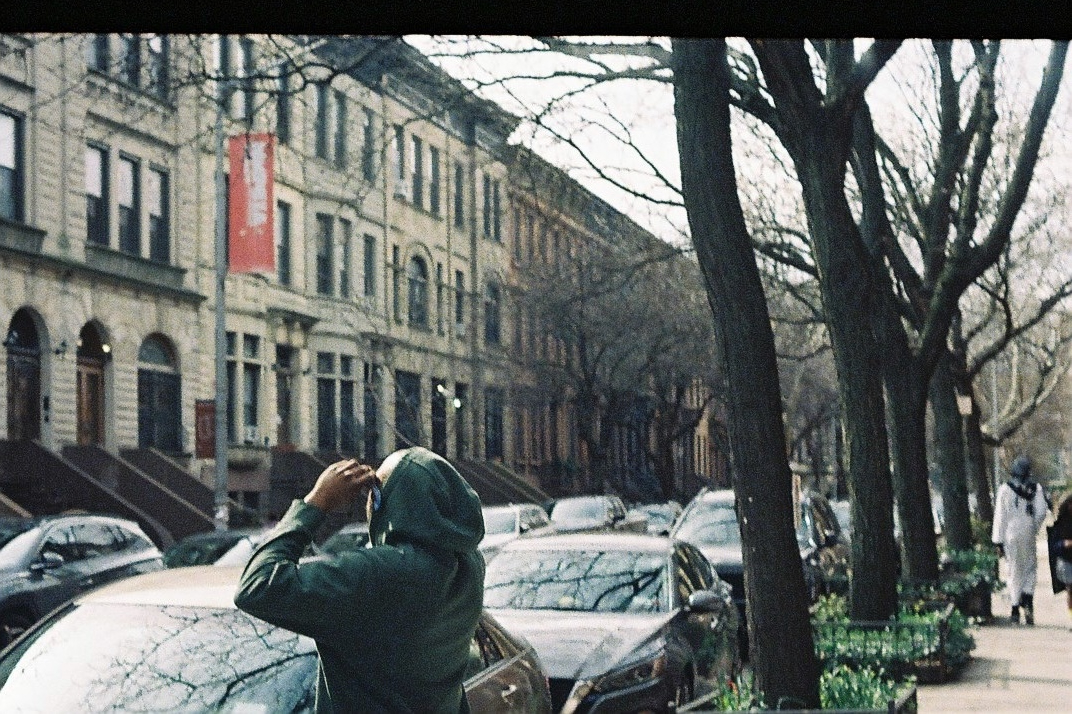
I feel like I’m looking at a life-size diorama, some 15 or 20 feet away from me. It's wide. There’s Sophia U in the middle of the diorama, the main pedestrian street that runs through campus. There are some people, and like in a diorama, the people are 2 dimensional and frozen in place, in media res

There’s K san on right side, and A somewhere on the left side. Scattered around the campus are my friendly, smiling, fresh-faced students, who are so kind to me that they make me reflect about the strange lofty power or privilege of being a sensei in Japan. 

There on the left expands Zoshigaya. What a fancy, middle-upper-class neighborhood, with charming golden surprises down every pedestrian-scale street. An owl made out of dried yellow grass; a small quiet cafe where I am both out-of-place and excited; a traditional toy shop; the autumn Kichimojin temple complex. There’s the long bright wooden living/dining room in the house where we stayed, with its orange hanging hammock reminding us to take it slow. J is cooking something in a navy apron and at the same time, she and I are there with N san sitting at the long wooden table enjoying a 4-hour meal with an never-ending amount of special food surprises. New foods, new names, new textures, new flavors. (How many more good things are there left to learn about?!) I didn’t know such exciting and comfortable moments could be had with a group of people. 

There it is, all in front of me. Frozen in place like paper dolls. Strange, ne? I could text or email any of those people. They are real and alive. But… it’s not like that, right? We are not on the daily type of texting relationship. They are placed in those imagined places, nicely, kind of in the past. But it’s not sad. 

Wednesday, June 10, 2026

Jorge the Church Janitor Finally Quits - Martin Espada, 1989. Translated to Japanese

(This poem was kindly translated for a lecture I gave at Sophia University on Latin American immigration in the United States.)


No one asks

where I am from,

I must be

from the country of janitors,

I have always mopped this floor.

Honduras, you are a squatter's camp

outside the city

of their understanding.


No one can speak

my name,

I host the fiesta

of the bathroom,

stirring the toilet

like a punchbowl.

The Spanish music of my name

is lost

when the guests complain

about toilet paper.


What they say

must be true:

I am smart,

but I have a bad attitude.


No one knows

that I quit tonight,

maybe the mop

will push on without me,

sniffing along the floor

like a crazy squid

with stringy gray tentacles.

They will call it Jorge.


誰も私に
どこの出身かなんて尋ねない。

きっと私は
「清掃員たちの国」の出身なのだろう。
ずっと昔から
この床を拭いてきたのだから。

ホンジュラスよ、
お前は彼らの理解という街の外れにある
不法占拠の集落だ。


誰ひとり
私の名前を正しく呼べない。

私はトイレで
宴を切り盛りする。
便器をかき混ぜる、
まるでパンチボウルみたいに。

私の名前に宿るスペイン語の響きは、
客たちがトイレットペーパーの文句を言ううちに
かき消されてしまう。


彼らの言うことは
きっと本当なのだろう。

私は頭がいい。
でも態度が悪い。


誰も知らない。

私は今夜で辞めるのだ。

たぶんモップは
私がいなくなっても
そのまま働き続けるだろう。

床を嗅ぎ回りながら、
灰色の細い触手を引きずる
気の狂ったイカみたいに。

そして彼らは
それをホルヘと呼ぶのだ。


Sunday, January 04, 2026

Oda a los calcetines - Pablo Neruda, 1957. Translated to Japanese by J. Chang

Me trajo Mara Mori
un par de calcetines,
que tejió con sus manos de pastora,
dos calcetines suaves como liebres.
En ellos metí los pies
como en dos estuches
tejidos con hebras del
crepúsculo y pellejos de ovejas.

Violentos calcetines,
mis pies fueron dos pescados de lana,
dos largos tiburones
de azul ultramarino
atravesados por una trenza de oro,
dos gigantescos mirlos,
dos cañones;
mis pies fueron honrados de este modo
por estos celestiales calcetines.

Eran tan hermosos que por primera vez
mis pies me parecieron inaceptables,
como dos decrépitos bomberos,
bomberos indignos de aquel fuego bordado,
de aquellos luminosos calcetines.

Sin embargo, resistí la tentación
aguda de guardarlos como los colegiales
preservan las luciérnagas,
como los eruditos coleccionan
documentos sagrados,
resistí el impulso furioso de ponerlas
en una jaula de oro y darles cada
día alpiste y pulpa de melón rosado.

Como descubridores que en la selva
entregan el rarísimo venado verde
al asador y se lo comen con remordimiento,
estiré los pies y me enfundé
los bellos calcetines, y luego los zapatos.
Y es esta la moral de mi Oda:
Dos veces es belleza la belleza,
y lo que es bueno es doblemente bueno,
cuando se trata de dos calcetines
de lana en el invierno.


マラ・モリが私に靴下を一足持ってきてくれた。

羊飼いの手で編まれた靴下は、

ウサギのように柔らかなものだった。

私はその靴下に足を滑り込ませた。

まるで薄明かりと羊皮の糸で編まれた

二つのケースに足を滑り込ませるように。


暴力的な靴下、私の足は二匹の毛糸の魚、

金色の編み紐が突き刺さった群青色の二匹の長いサメ、

二羽の巨大なクロウタドリ、二門の大砲のようだった。

私の足はこうして、この天上の靴下に敬意を表された。


靴下はあまりにも美しく、

初めて私の足が受け入れられないものに思えた。

まるで二人の老いた消防士のように。

刺繍された炎に、あの光り輝く靴下に値しない消防士のように。


しかし、私は彼らを学生のように

ホタルを守らせたい、

学者のように聖典を収集したいという強い誘惑に抗い、

彼らを金の檻に入れ、

鳥の餌とピンク色のメロンの果肉を

毎日与えたいという

激しい衝動にも抗いました。


ジャングルの探検家が希少な緑の鹿を

串に刺して後悔しながら食べるように、

私は足を伸ばして

美しい靴下を履き、

そして靴を履きました。


そして、これが私の頌歌の教訓です。

冬に毛糸の靴下を2足履くと、

美しさは2倍に美しく、

良いものは2倍に良いものになります。

Tuesday, September 10, 2024

three big authors saying similar things about social scalability from different disciplines

1. Osamu Dazai - No Longer Human (1948) - something about where is the line between the individual and society?

2. Anna Tsing - Mushroom at the End of the World (2015) - something about the difficulty of scaling between the small local to global ecological-economic phenomena

3. Tim Morton - All Art is Ecological (2021) - something about how many individual(s) create climate change?

(will fill in specifics later)

Friday, June 21, 2024

do you remember the eclipse?

do you remember the eclipse? I didn't have the glasses and I was in Morning Heights, Manhattan, with an old half-frame camera, so I took pictures through a different lens, which I found more exciting than the eclipse! today I received the scans of those photos. #olympusPenF


Friday, June 14, 2024

"global nomad" visas are not a good solution to today's economic crises and tiktok fantasies

With the increase of "global nomad" visas (Japan, Spain, Portugal) we are going to see more and more middle-upper class and upper-class adults, a high percentage of foreigners, evicting locals (and their businesses, their deep-rooted social lives, etc.) from the centers of city's. Not all cities, but those that are safe (not US), have nice public transportation, cultural activities, and decent weather.

As this occurs, we will see corporations trying to recreate and sell cultural atmospheres of how life "used to be," locally, before this expulsion. By cultural atmospheres, I'm referring to cultural consumer products that people sell and that recreate some local historical or traditional aspects, for example, films, posters, hotel interior designs, etc. These local cultural fabrications of the past, of course, are acritical and say nothing of how we got from point A (past) to point B (present). In other words, info about the mistakes and the humans that made the poor decisions, are nowhere to be found. So we don't learn and this expulsion, economic polarization between rich and poor, increases. 

Then a socio-economic divide will grow thicker between locals and non-locals. The local economy will split between (for instance, in Spanish cities: el precio normal vs. el precio turista). 

Are you saying that an innocent nomad visa is related to a global split between rich and poor?!

Yes!

So you also benefit from this wrongdoing.

Yes.

Monday, May 20, 2024

What's hard about being a cultural spectator is that it makes you fall in love with humanity, makes you feel big feelings and makes you dream of big things. And reality is the opposite. So you have to mediate these two. 

Sunday, November 26, 2023

Toronto

I was in Toronto for 5 days last week and it was a time of lots of learning, so I wanted to write something for my imaginary audience quickly before I forget. I was attending my 1st AAA (Anthropology) conference and it was really eye-opening and inspiring. There were hundreds of innovative panels on hundreds of unconventional topics, every facet of everyday life was being scrutinized through a critical social lens, from coffeeshop communication to cassette tapes, from Japan’s aging problem in the countryside to gamete donors in Spain! Each research presentation was a real presentation written for the audience (vs. reading a paper), so the audience (and I) understood the presentations, which generated very good long conversations after each panel. (The conference organizers put a great deal of emphasis on accessibility, I was grateful.) I think all this is what Cultural Studies wanted to do, but doesn't often do. One thing that surprised me is that folks at the conference who study human culture self-identify and present themselves with a lofty noun: anthropologists. How does one acquire a noun-title based on a discipline, when does it start and when does it end? I am curious about this as I like the sound of saying "I'm a ________." It gives a bit of relief to one's existential crisis! But I've never heard of anyone calling themselves as such until the conference.

Besides that, I got to explore the city of Toronto. Things I liked: 
running into and talking to the owner of the original Kim’s Convenience, 
walking around with my nephew Arveen, 
eating delicious vegetarian Vietnamese food at #SaigonLotus
running into and exploring a very good camera shop #downtowncameratoronto, 
staying at a hostel above a jazz cafe, 
and being able to walk to the train station and take the train to the airport! 
Things I didn’t like: 
US-style macho aggressive driving/car culture. I saw too many cars pressuring pedestrians to hurry across the street. 
Also, the city’s leaders have sold the city to millionaires and speculators. There’s nowhere central or semi-central for middle- and lower-income residents (like the fictional and real owners of convenience stores) to live.


Friday, September 29, 2023

lively simile from Dahl's "Rat Catcher"

"The word 'rats' came out of his mouth with a rich, fruity sound as if he was gargling with melted butter."

Brilliant!

Wednesday, June 28, 2023

CD = music/accesible community Shibuya Tower Records

In Shibuya, Tokyo there remains a Tower Records. Some may remember Tower Records from the 1990s. The Tower Records in Shibuya is massive, there must be some 6-8 floors of new CDs and vinyls. When I entered the building yesterday, I was mind-boggled and impressed! In the US, I haven't seen any major stores selling new CDs since the early 2000s. I had given up on CDs in 2012 when I left New Zealand and didn't want to travel with the weight. Since then, over the years, I had complained to family members and friends about how complicated it is nowadays to simply play an album. You can turn on Youtube or Spotify, but they're full of commercials, interruptions, and glitches. You can pay for those services, but who are you paying? Where? And even if you pay for those services, you still can't simply play the album chronologically, you have to make sure everything is charged, logged in to, or connected to Bluetooth (which for me, a hearing aids wearer, nearly always takes several attempts). Meanwhile an anonymous source take your cookies and personal data. And then you forget your password, or the internet is down, or your credit card expires, or they won't let you cancel!! Uggh!

I spent 9 years without music until two years ago when my other half gifted me a straight-forward single CD player. It's so easy, you just make sure it's plugged in, you push Eject, insert a CD, and that's it! It works 100% and it has made my life better. But it was tricky to find new CDs, most artists in the US don't sell their music in CD format anymore. 

Returning to Shibuya on a hot sunny summer day. Tower Records. It was full of people of all ages browsing CDs, talking to their friends and the salespeople about albums, people listening to CDs together with store-owned headphones. Tokyo (so it seems to me) is good at maintaining things, especially older technology. What I saw at Tower Records didn't seem like a nostalgia fad or trend, but a continued and sincere interest in old and new music. Tower Records is obviously a business, but a pretty accesible (and now small) one where the positive social life seems to outweigh any harm. The CDs cost around what they costed in the 90s, $15-17 USD (plus 10% tax free discount for foreigners).

A couple observations occurred to me: 

1) the face-to-face community that used to exist around music isn't there as much as it used to be. It might exist in Tokyo (with all their 165 live jazz cafes), and maybe in some college dorms, but I don't see it elsewhere. Sometimes people share Spotify playlists, and occasionally I will "save" something on Youtube, but I don't end up listening for the reasons above. The excitement and socialization are not there anymore, not like it was with a mixed tape/CD. Time has sped up, capitalism has become more exploitative, politics are in the way, and life has become more solitary and virtual. At Tower Records I ended up buying two new CDs (Japanese artists: Shibusashirazu and Humbert Humbert) and I got excited walking home with these in my backpack, I was going to enjoy this--albeit alone!

2) most albums are already uploaded to Youtube. So why buy the material form? For me, it was for convenience and to support the artist.

3) there's a shrine to Michael Jackson on the 7th floor of Tower Records alongside a table overflowing with fresh flowers.


Saturday, June 03, 2023

3 flags seen hanging from Madrid balcones, late May 2023

- "SOS" in Chueca = housing prices are unaffordable
- yellow in Lavapiés = against drug dealing occurring in the neighborhood 
- Spanish flag several neighborhoods = increased nationalism (V0x) 

Saturday, April 01, 2023

defending slow creative work

 I just heard in a documentary that it took Leonard Cohen 7 years to write the song "Hallelujah."

"Ducking away to write feverishly. If writing two words a day is a fever." 

Saturday, February 04, 2023

Why the city?

"The city is the place where women had choices open up for them that were unheard of in small towns. and rural communities. Opportunities for work. Breaking free of parochial gender norms. Avoiding heterosexual marriage and motherhood. Pursuing non-traditional careers and public office. Expressing unique identities. Taking up social and political causes. Developing new kinship networks and foregrounding friendship. Participating in arts, culture, and media. All of these options are so much more available to women in cities." 

--Leslie Kern

Monday, January 23, 2023

Glorias Fuertes, things and two poems translated

I'm teaching a class about the agency/power of everyday things and objects (of the Spanish-speaking world). We are starting with some poems by Gloria Fuertes and Pablo Neruda. I could not find translations to Fuertes's poems, so I translated them in case anyone in this cyber space is interested: 


Things, Our Things [Las cosas, nuestras cosas]

Things, our things,

they like to be loved;

my table likes me to rest my elbows,

the chair likes me to sit in the chair,

the door likes me to open and close it

just as wine likes me to buy it and drink it,

my pencil falls apart if I pick it up and write,

my closet trembles if I open it and peek in,

the sheets are sheets when I lie on them

and the bed complains when I get up.

What will become of things when there are no more people?

Like dogs, things don't exist without their owner.


----------


The Typewriters [Las máquinas]

The dreary office

humanized itself at night

there was a light typing sound.

The typewriters were writing

--to one another--

love letters.


Wednesday, January 11, 2023

sleds instead of cars

a sustainable form of urban transportation ; )


first two photos taken with iphone, last with Pentax 35mm MZ-5


Wednesday, November 30, 2022

Los Espookys


I can really relate to Tati. My favorite line by her is (something along the lines of): 
"I'm in the past, present, and future, that's why I act weird."
Other things I like about Los Espookys
- very clever smashing together of Spanish/English/Spanglish
- unproblematic smashing together of youth and adulthood
- humorous critique of the bourgeoisie, American imperialism, material excess, (white) elitism of both the US and Latin America
- unproblematic gender bender 
- rare pan-US Latinx/Latin American collaboration 
- deadpan/dry/cheesy humor
- esperpento: silly exaggeration of situations reflects real-life stupidity 
- humorous pastiche aesthetics (surrealism, kitsch, B films, 1980s, 1990s, and probably other styles)
- Tati's out-of-place clothing (1990s US teen suburbia) 
- all of this being made accessible to a huge public (HBO Max)!

Thank you Ana Fabrega and Julio Torres!


Tuesday, April 12, 2022

CDs

When I left New Zealand in 2012, I gave my CD player to one of my students. It was a bright red portable one. Since then, I really haven’t listened to music other than the random songs that come out of Spotify/Pandora when I go to the gym, almost never. During the pandemic I realized how inconvenient and complicated it has become to watch TV or to listen to the radio or a music album. Yesterday I received an Air Mail package (yippee!) from Escorial street in Barcelona. It was 8 colorful CDs from 3 different contemporary Catalan musicians #manel, #antoniafont, #amicsdelarts, and I realized the extent that streaming digital music misses out on the full album experience. Streaming music is like only looking at a tiny fragment of a painting or reading just one page of a book. … No more plastic that gets broken. No more wifi glitches or commercial interruptions! The CDs came in a little matte colorful hand-size books with playful art work, and inside of that there’s a smaller book with more artwork and the song lyrics. The songs are related to designs and textures. Tactile poems (a tactile experience) and visual work. Is it nostalgia or just a more expansive experience? Probably both!

Tuesday, September 08, 2020

tiny messymates

 "I love the fact that human genomes can be found in only about 10 percent of all the cells that occupy the mundane space I call my body; the other 90 percent of the cells are filled with the genomes of bacteria, fungi, protists, and such, some of which play in a symphony necessary to my being alive at all … I am vastly outnumbered by my tiny companions; better put, I become an adult human being in company with these tiny messmates. To be one is always to become with many."

-Donna Haraway, When Species Meet

Thursday, July 30, 2020

In Place/Out of Place

"...the word place turns up in common phrases such as "a place for everything and everything in its place" or "know your place" or "she was put in her place." In these expressions the word place clearly refers to something more than a spatial referent. Implied in these terms is a sense of the proper. Something or someone belongs in one place and not in another. What one's place is, is clearly related to one's relation to others. In a business it is not the secretary's place to sit at the boss's desk, or the janitor's place to look through the secretary's desk. There is nothing logical about such observations; neither are they necessarily rules or laws. Rather they are expectations about behavior that relate a position in a social structure to actions in space. In this sense "place" combines the spatial with the social — it is "social space." Insofar as these expectations serve the interests of those at the top of social hierarchies, they can be described as ideological. The example of the business can be extended to society as a whole. Just as the business has a social hierarchy, society has levels of power and influence related to class, gender, race, sexuality, age, and a host of other variables. Similarly, the building in which the business is located has spatial divisions, and the world outside is divided up into segments—houses, streets, public places, libraries, shops, and so on. Just as in the business, there are expectations about behavior in these places that are related to positions in the social structure. Many of these expectations are written into law. Most, however, remain unstated and taken for granted."

Thursday, July 02, 2020

konstructor by lomography

 quarantine fun!


Sunday, August 04, 2019

Friday, June 14, 2019

define beauty // Yamanashi June 2019 (Fujifilm 16mm f/2.8)

[you can click to see larger]


In these digital pics I tried to capture the sublime feeling of an ineffable otherworldly day at Hosokawa sensei and Takami san’s house, two hours southwest of Tokyo. I didn’t have a tripod, so I used any flat surface I could find.

(Unfortunately, I couldn’t capture the fragrant smells: after-rain pine, cedar, tatami (straw), raw wood and some kind of sweet grass.)

Hosokawa sensei and Takami san helped design their house–the most sublime and original house I’ve ever been in–I call it the “ki no ie” (tree house). The design is simple, light, and vertical. It consists of 4 raw wood floors with two hollow square centers, like wood lofts on top of one another, each floor and each room are visibly connected to the others. There are NO interior walls between the rooms or floors! (A little bit as if an American backyard deck was in the shape of the number 8 and was replicated and stacked on top of one another, but more solid). 

Then there was the generous vegetarian meal they made for us. Most of the ingredients (bamboo shoots, mushrooms, “amasake” = a hot sweet rice drink) came from their garden or the nearby mountains, and, of course, so beautifully presented.

Then there was the study or seminar space as one of Hosokawa sensei’s retirement projects. (This will be a dream for many professors.) He created the “seminar no ie” (seminar house) an independent retreat space for linguistics/pedagogy grad students to come and study and hold seminars or “tertulias”! Again, the same warm bright wood, tatami architecture, and fresh wood smell.

The overcast weather saturated the color and made everything rich and quiet like a novel.

If that wasn’t enough!… another retirement project (and another professorial dream): with their students and artist friend, Ryu Motosugi, they built a cafe gallery, シュマン・デュ・ボヌール(chemin du bonheur)!

Lastly, gentle company and conversation amongst 5 people who didn’t share a common language but who spent their lives studying how to communicate with those whom we don’t share a common language!

Here’s to creativity and kindness! ありがとうございます!

Saturday, June 01, 2019

Shibusashirazu Orchestra at the Pit Inn, Shinjuku

Last night I saw what was maybe the most exciting performance I've ever seen. I don't have the music vocabulary to describe it, and from what I've read online, their whole concept is to be undescribable (their name, Shibusashirazu Orchestra, translates to "Don't Be Cool Orchestra"). those who know me know I'm all about "heterogeneity" and flexibility and that's what this group performed. for 2 hours they fused and improvised jazz, 1950s exotica, psychedelic, rock, ska, klezmer, other sounds I had never heard before, and whatever visually inspired all that. i kept thinking of the D+G's idea of exploiting the medium to see what experiences it can create. that's what they did. it was loud. instruments made sounds that I didn't know they could make. and to add to that, my hearing aids, which always distort sound and differently in each ear, fit the situation well (but were triggered in ways they weren't programmed to deal with, the right one was capturing high frequencies as loud squeals, I had to remove it, so what I describes only comes from my left ear). when the big instruments rested, i could hear the xylophone, like turquoise water, it was really nice. the bananas reminded me of Dalí's baguettes. And as was typical of Tokyo jazz clubs, the space was tiny, air was thick, everything was sensorially dense and shaking, no screen mediation (except my phone). I wish I had had a better camera with me. this video clip is from my old phone.  

thanks to Toko Shiiki, without her I would have never come across this, all their public info is in Japanese. thank you, Toko!


Friday, May 10, 2019

Olympus XA with B+W 35mm film Foma Retropan Soft


over-exposed, low contrast, and with a lot of grain. 

I’m attracted to messiness, blurriness, and long exposures because as I get older and as a sure-fail level of perfection and productivity is more and more demanded around us, these other characteristics are a welcoming respite and they visually articulate my sensorial experience and my default state of mind (which is almost always looking backwards confusingly)

really, the results remind me of a flashback within a Fellini movie or some of the 1920s architecture magazines from Barcelona